Somewhere along the way, dating turned into a project plan. Third date, define it. Two months, meet the friends. Six months, "so where is this going?" We started treating first dates like job interviews for a role called Future Spouse — and then wondered why everyone felt so tired. In 2026, a lot of people quietly decided to put down the spreadsheet.
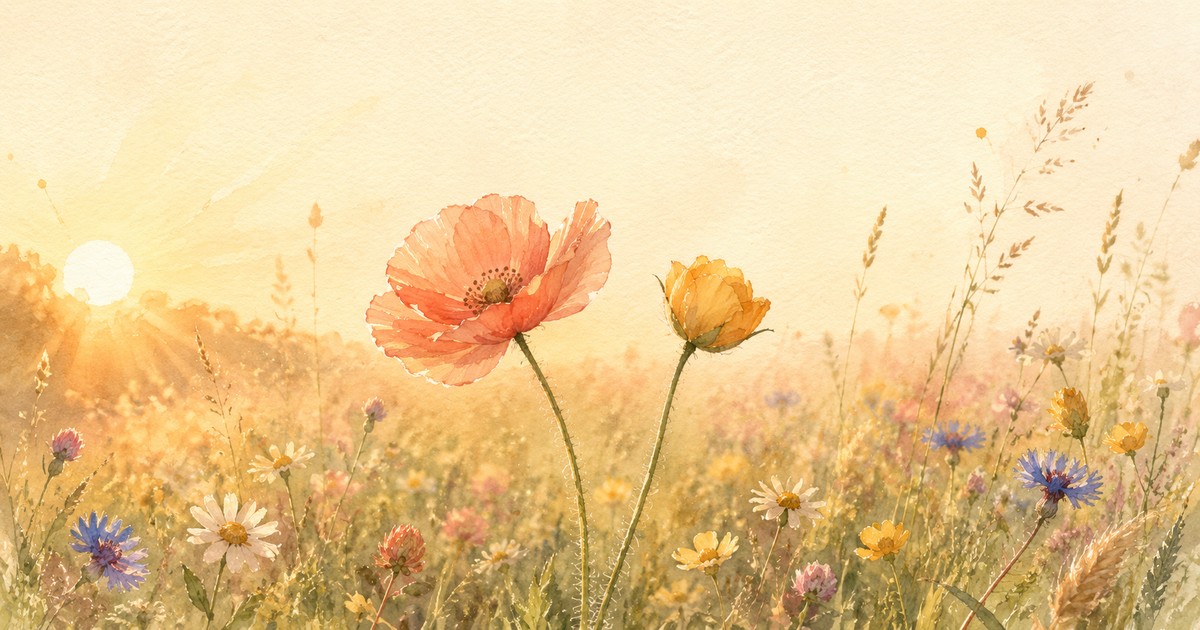
The word they're using for it is wildflowering: letting a relationship grow the way a wildflower does — on its own, at its own pace, without anyone forcing it to bloom on schedule.
What Wildflowering Actually Means
Wildflowering means allowing a connection to develop organically — to "wilt or bloom on its own" — instead of imposing rigid timelines, labels, exclusivity milestones or ultimatums from the start. The metaphor is the whole point: wildflowers aren't planted in tidy rows and watered on a timer. They come up when and where they come up, and they're lovely precisely because nobody managed them into it.
In practice, that means resisting the pressure to "keep up" with a storybook relationship timeline and instead moving at a pace that feels true to both of you. As Mental Floss puts it, wildflowering is essentially the opposite of "DTR" — define the relationship. Instead of scheduling the "what are we" talk, you tune into what actually feels good and let the thing unfold. It applies to brand-new sparks and to established couples fending off the milestone pressure of "you've been together HOW long and you're not engaged?"
Where It Came From
Despite the very 2026 feel, wildflowering isn't a random TikTok coinage. It was named by Chantelle Otten, a sexologist for Bumble, in an April 2025 piece for Stylist — originally framed as a spring "reset," a confident-but-relaxed way of dating freely and on your own terms. It sat quietly for about a year, then bloomed (sorry) into a full-blown relationship philosophy across summer 2026, picked up by Psychology Today, Vogue, USA Today and the rest of the trend-cycle machine.
That origin matters, because it tells you what wildflowering is reacting against. It didn't come from people who've given up on love. It came from a dating app watching its own users get exhausted by the very timeline-and-checklist culture the apps helped create.
Why 2026 Was Tired Enough to Want This
Wildflowering is riding a very real wave of fatigue. In a Forbes Health / OnePoll survey of 1,000 U.S. adults, 78% of dating-app users said the apps leave them feeling emotionally, mentally or physically exhausted at least sometimes — climbing to 79% among Gen Z, and higher for women (80%) than men (74%). When the on-ramp to romance feels like a second job, the appeal of "let's just... not force it" is obvious.
The trend's own origin data says the same thing in a sunnier accent. Bumble's research (via Stylist) found 72% of UK singles wanted to date more freely once spring arrived, 57% felt inspired to "reset" their dating life — including finally moving on from an old situationship — and 35% described their vibe as simply "fun, flirty and free." Read together, those numbers describe a generation trying to take the pressure back out of dating.
And it's a pointed backlash against the strategy era. As Psychology Today's Bruce Y. Lee notes, apps and endless relationship advice have pushed people to make big decisions far too fast — swiping someone in or out in seconds, running every new person against a rigid checklist, deciding on date two whether this could be The One. Wildflowering is the exhale after all of that: what if you just got to know a person, and yourself, without the countdown clock?
A wildflower doesn't ask what it is by the third week. It just grows toward the light and sees what happens.
Wildflowering vs Situationship vs Slow Dating: The Family Tree
Wildflowering has some very close relatives, and the differences are the whole ballgame.
A situationship is the toxic cousin. It's usually undefined and unequal: one person quietly wants more while the other avoids putting a name to anything, and the ambiguity is a slow leak that hurts. The pain isn't the lack of a label — it's the mismatch the missing label is hiding.
Wildflowering is meant to be the opposite of that: mutual and intentional. Both people knowingly choose to skip the timeline, and — crucially — they keep talking honestly about what they want. That's why advocates argue it's far less toxic than a situationship. The catch is that the line between them is thin. Take away the mutual buy-in and the honesty, and wildflowering quietly becomes a situationship wearing a prettier name.
Slow dating is the sibling that shares its values but not its method. Slow dating is about deliberately dialling down the pace and volume — fewer matches, longer conversations, more intention before intimacy. Wildflowering overlaps (both reject rushing) but it's specifically about removing the labels, timelines and expectations and going with the flow, rather than methodically vetting. You can be a slow, intentional dater who still very much wants to DTR. A wildflowerer is the one who's decided the "what are we" question can wait until it answers itself.
The Science of Who It Actually Works For
Here's the honest part the cute name skips: wildflowering is not for everyone, and the deciding factor is your attachment style.
Celebrity love coach Nicole Moore, speaking to Glam, is blunt about it. Wildflowering can genuinely help the type-A "control freaks" of dating — people who tense up and perform because they're already auditioning a stranger for a wedding — by taking the pressure off so they can actually show up as themselves. But she wouldn't recommend it as a default approach for most people, and especially not for those with less secure attachment styles. Anxiously attached people tend to dislike the lack of labels and direction; avoidant people can use the lack of structure as a licence to keep dodging. The people who thrive with wildflowering, she notes, are the securely attached — the ones least likely to be thrown by a little ambiguity in the first place. (If you're not sure which camp you're in, our anxious–avoidant trap piece is a good mirror.)
Psychology Today lands in a similar place. Wildflowering suits people early in their dating lives, people who genuinely aren't ready to commit, and people still figuring out what they want — and it can be a real corrective for anyone who rules people in or out too fast. But it only works, Lee stresses, if both people are actually into it and you're honest about your own preferences. His practical rule is almost aggressively simple: know yourself, know your situation, know what you truly want — and say so.
When Wildflowering Is Just a Situationship in a Sundress
Because the concept is so gentle, it's easy to abuse — and plenty of the coverage says so out loud. AOL/HuffPost's take was, roughly, it sounds sweet, don't be fooled: the same warm language that describes healthy patience can just as easily describe someone avoiding vulnerability, dodging the future, and calling it a nature metaphor. The New York Post flagged a quieter risk: that "no expectations" slides into "no standards," and you coast into somewhere you never actually wanted to be, mistaking drift for growth.
A few honest tells that your "wildflowering" has curdled:
- Only one of you chose it. If you're the one keeping the arrangement label-free and your partner is quietly aching for clarity, that's not a wildflower. That's a situationship, and you're the weather.
- "Let it unfold" has become "never discuss it." No labels is fine. No conversations is not. Wildflowering requires ongoing honesty; silence is just avoidance with better branding.
- Your standards left with your timeline. Dropping the checklist is healthy. Accepting crumbs because you've told yourself you have "no expectations" is not.
- You can't answer "why am I doing this?" If the real reason is fear — of commitment, of rejection, of being seen — no amount of meadow imagery will make that grow into something good.
How to Wildflower Without Getting Hurt
The good news is that everything that makes wildflowering risky also has a fix, and the fix is never "a label." It's honesty.
- Make it mutual and say it out loud. "I'm really happy with this and I'm not in a rush to define it — are you?" is a complete, healthy sentence. The thing that makes situationships hurt is the unspoken mismatch; naming your intent removes it.
- No labels doesn't mean no check-ins. Every so often, confirm you're both still enjoying the pace. You're not scheduling a DTR — you're making sure nobody's secretly white-knuckling.
- Drop the checklist, keep the standards. Use the freedom to notice how someone actually treats you instead of rushing exclusivity or fast-forwarding to the wedding. Freedom from a timeline is not freedom from your own non-negotiables.
- Know your attachment style first. If you or your partner lean anxious or avoidant, add a little more reassurance and structure so the openness doesn't tip into anxiety or become a hiding place. Secure-ish people can run wilder.
- Audit your motive, honestly. Ask yourself why you're letting it unfold. Genuine going-with-the-flow and quiet fear of commitment can look identical from the outside — but only one of them is worth protecting.
- Don't string a flower along. If the arrangement stops working for you, say so promptly. "Letting it wilt" without telling the other person is just a slow ghost.
Wildflowering When You're Already a Couple
Here's the part the dating-app coverage tends to miss: wildflowering isn't only for the first six weeks. Some of the loudest timeline pressure in the world lands on people who are already, unmistakably, together. "You've been dating HOW long and you're not engaged?" "When are you two moving in?" "Tick-tock on the kids, you know." A relationship can be happy, healthy and completely on track for the two people in it, and still get treated like it's behind schedule by everyone standing outside it.
Applied to an established couple, wildflowering just means agreeing to run your relationship on your clock instead of the group chat's. It's deciding, together, that the next milestone happens when it's genuinely right for you both — not when a cousin's wedding, a friend's baby announcement or a round-number anniversary says it should. The research on relationship satisfaction is quietly on your side here: couples tend to do better when their choices feel like their own rather than performed for an audience. Autonomy isn't the enemy of commitment; it's part of what makes commitment feel chosen instead of conscripted.
The one non-negotiable is the same as it is for new couples: the two of you have to actually be on the same clock. "Let's not rush" is a beautiful shared plan and a terrible solo one. If one of you is quietly counting down to a milestone while the other keeps saying "let it bloom," that's not wildflowering — it's a slow-motion version of the exact mismatch that breaks couples up. Which brings us back, as it always does, to the conversation.
The Version Worth Having
Underneath the trend name, wildflowering is pointing at something genuinely healthy: the idea that a relationship can be a living thing you tend rather than a milestone chart you complete. Real closeness rarely arrives on a schedule. Some of the best relationships anyone's ever had started as two people who, on purpose, let it grow — and then, also on purpose, kept telling each other the truth as it did.
That last part is the whole trick. Wildflowering fails when "no labels" becomes "no conversations," and it works when you stay curious and candid the entire way through. You don't need a DTR ultimatum to stay connected — you need a habit of actually talking. That's exactly what we built Heart to Heart for: a deck of open, deepening questions that turns "where is this even going?" from an anxious guessing game into a warm, honest ten minutes about what you both actually want. No timeline required — just the truth, one question at a time.
Let it bloom on its own. Just make sure you're both still there, tending it, when it does.
No labels needed — just keep talking. Heart to Heart gives you one open, deepening question at a time, so a relationship that's growing on its own still gets the honest conversations that keep it healthy. Ten warm minutes beats a hundred anxious guesses.
Try Heart to Heart