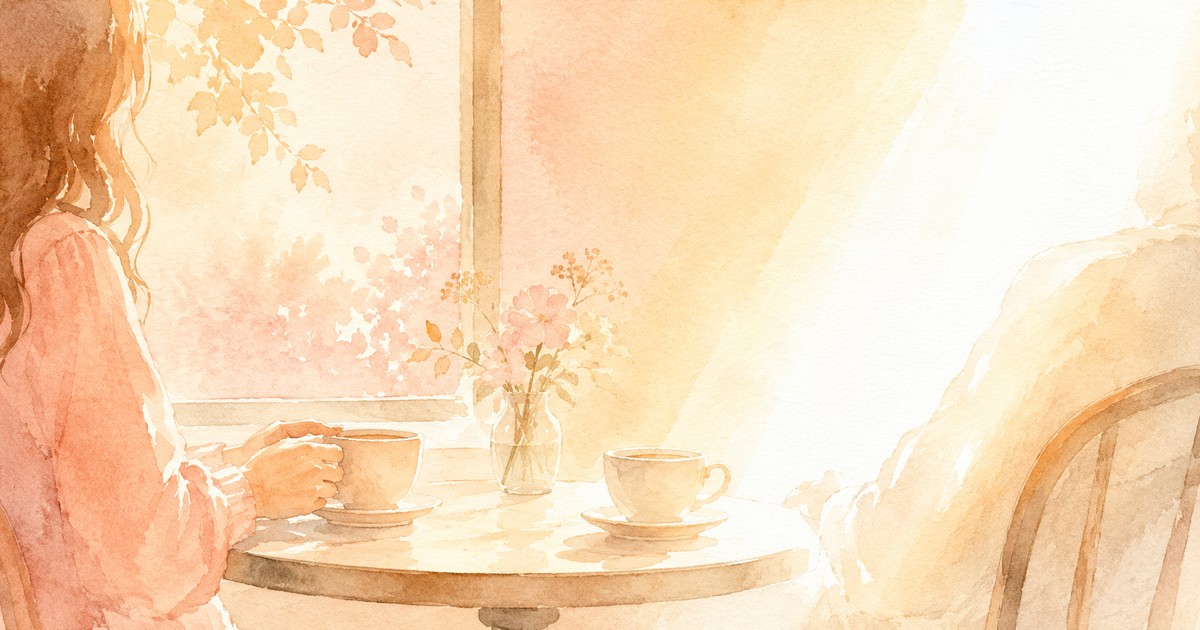
Twenty minutes into a first date, before the appetisers land, one person leans in and lays it all out: the childhood that broke them, the ex who wrecked them, the diagnosis, the darkest year of their life. It feels brave. It feels like radical honesty. And across the table, the other person is smiling politely while some quiet part of them is already reaching for the door.
There's a name for that moment now, and it's spreading fast through dating conversations: floodlighting. It looks like vulnerability. The research says it's often the opposite — and it repels the very closeness it's chasing.
What Floodlighting Actually Is
Floodlighting is the act of overwhelming someone with your deepest, heaviest personal material far too early — usually before any real trust has been built — in an attempt to manufacture instant intimacy. It's the first-date trauma dump, the second-text confession of your worst wounds, the "I feel like I can tell you anything" aimed at someone you met on Tuesday. Writing in Forbes, psychologist Mark Travers describes it as overwhelming a new partner with vulnerability in a way that functions "more like a test than a genuine attempt at connection."
The behaviour has been relabelled as a Gen Z dating trend, with outlets calling it everything from a way of "turning first dates into therapy sessions" (DNA) to a spark-killer that quietly pushes people away (IBTimes). But the underlying idea isn't new at all — and its origin is the most useful part of the whole story.
The Name Comes From Brené Brown
Long before it was a hashtag, the term was coined by researcher and author Brené Brown, whose entire body of work is a defence of vulnerability. That's what makes her verdict on floodlighting so pointed. She describes it plainly: "Oversharing? Not vulnerability. I call it floodlighting" (Brown, Daring Greatly).
Her metaphor is worth sitting with. A floodlight is blinding. Point one at someone in the dark and they don't feel warmed or invited in — they flinch and shield their eyes. Brown's argument is that dumping your rawest material on a near-stranger works exactly the same way: it's so much light, so fast, that the other person can't actually see you. They just squint and step back. Crucially, in her framing floodlighting isn't real openness at all. It's often a way to avoid the slower, scarier work of genuine connection — a hot blast of disclosure that lets you feel exposed without ever having to be truly, patiently known.
A floodlight doesn't invite you closer. It makes you shield your eyes and step back. That's the whole problem in one image.
Why the Flood Backfires
Intimacy isn't built by revealing the most; it's built by revealing the right amount, at the right pace, to someone doing the same back. Decades of research on how relationships deepen describe closeness as a gradual, layered process — two people peeling back slightly deeper layers of themselves over time, each disclosure met and matched by the other. The warmth comes from the reciprocity and the timing, not the raw volume of confession.
Floodlighting breaks all three of those rules at once, which is why it lands so badly:
- It skips the ladder. You've jumped a stranger straight to your deepest layer without climbing any of the rungs in between. There's no shared history to hold that much weight, so instead of feeling trusted, they feel burdened.
- It's one-way. Healthy disclosure is a volley — I share, you share, we both step a little closer. A flood is a monologue. The listener didn't consent to this depth and can't reciprocate at the same intensity, so the exchange tips from mutual into lopsided.
- It casts them in a role they didn't audition for. Unload your unprocessed pain on a second date and you've quietly made the other person your therapist, your rescuer, or the judge of whether you're "too much." That's a heavy job to hand a person over one drink.
The result is the exact opposite of the goal. Instead of "wow, we're so close already," the other person feels pressure, discomfort, and a subtle sense of being managed. Many respond by pulling away — and to the floodlighter, that withdrawal can feel like proof that people can't handle the "real" them, which fuels the next flood. It's a loop that's painful precisely because it's driven by a real desire to be seen.
Floodlighting vs. Real Vulnerability
Here's the distinction that makes this whole idea worth understanding, because the surface content of the two can look identical. The difference is never the topic — it's the timing, the mutuality, and the intent.
Brown's own framing is that vulnerability is sharing your feelings and experiences with people who have earned the right to hear them. Real openness is offered when some trust already exists, it leaves room for the other person to meet you, and it's shared because you want to be known — not because you need something back right now. Floodlighting, by contrast, is aimed at whoever happens to be sitting across from you, it arrives before any trust has been built, and underneath it there's usually an ask: reassure me, rescue me, prove you won't leave, tell me I'm not too much.
A quick gut-check, drawn from how experts describe the difference:
- Vulnerability sounds like: "That's actually something I've struggled with too — can I tell you a bit about it?" It's paced, it's invited, and it can breathe.
- Floodlighting sounds like: an unbroken twenty-minute download of your worst chapters, delivered to someone you met an hour ago, that leaves them nodding and quietly overwhelmed.
This is also why floodlighting is a close cousin of the intensity that gets mistaken for love. Both trade slow, earned closeness for a fast, dramatic hit that feels like connection but hasn't actually been built. And it's worth saying clearly: floodlighting is not the same as love-bombing. Love-bombing floods you with excessive affection and grand gestures to gain control; floodlighting floods you with heavy disclosure, usually out of anxiety rather than strategy. But they rhyme in one important way — both use overwhelming intensity as a shortcut, and both tend to set off an instinctive urge in the other person to back away.
Why We Reach for the Floodlight
Almost nobody floodlights to be manipulative. It usually comes from a tender, understandable place, which is exactly why it deserves compassion rather than a label slapped on it. A few of the common engines behind it:
- The hunger to be known, fast. Modern dating is exhausting, and the wish to skip past the small talk to something that feels real is deeply human. Floodlighting is what that wish looks like when it outruns the trust it needs.
- A test in disguise. Sometimes the flood is a screening tool: "If I show you the worst of me right now and you stay, I'll know you're safe." It feels efficient. In practice it front-loads a pass/fail exam onto a person who hasn't even had a chance to like you yet.
- An anxious attachment pattern. For people who fear abandonment, oversharing can be a way to force premature closeness and pin someone in place before they can leave. It's one of the moves we touched on in the anxious–avoidant trap — reaching so hard for reassurance that you accidentally create the distance you dread.
- Blurred lines online. We've all watched people share raw, unfiltered pain to thousands of strangers on social media, and some of that norm has leaked into dating. One 2022 study in Psychological Reports linked online oversharing to anxiety, attention-seeking and heavy social-media use — a reminder that the impulse to broadcast our wounds is being actively shaped by the platforms we live on (Vice).
Am I Floodlighting? A Gentle Self-Check
None of this means you should armour up and reveal nothing. The goal isn't less honesty — it's honesty that the relationship can actually carry. If you're wondering whether your openness is tipping into floodlighting, a few honest questions help:
- Am I sharing this because I want this specific person to know me — or because I need a reaction, reassurance, or rescue right now?
- Have I given them any room to respond, or am I delivering a monologue?
- Would I feel exposed and regretful if this didn't go anywhere — the classic "vulnerability hangover"?
- Am I telling this story from a scar, or an open wound? Processed pain can be shared with steadiness. Unprocessed pain tends to pour out and pull the listener under.
- Is there any trust here yet to hold the weight of what I'm about to say?
That last one is the heart of it. Depth isn't the problem. Depth before trust is.
How to Go Deep Without Flooding
The antidote to floodlighting isn't becoming guarded and surface-level — that's just the opposite failure. It's learning to build intimacy the way it actually forms: gradually, and together. A few ways to do that on purpose:
- Match the other person's depth, roughly. Think of disclosure as a rally, not a serve. Offer a little more than they just did, then leave space for them to meet you. If they step deeper, you can too. That back-and-forth is the actual mechanism of closeness.
- Let trust set the pace. A useful rule of thumb some experts suggest: save your heaviest material for after a few real interactions, once some mutual safety exists. Early dates are for discovering whether you like each other, not for stress-testing whether they can hold your trauma.
- Share scars, not open wounds. There's a difference between "here's something hard I've worked through, and what it taught me" and pouring out raw, still-bleeding pain. The first invites closeness. The second asks for triage.
- Trade the flood for genuine curiosity. Closeness grows just as much from being interested as from being revealing. Structured, escalating questions are a beautiful shortcut here — which is the entire idea behind the 36 questions that lead to love: a paced ladder of prompts that deepens by design, with both people climbing together instead of one person leaping.
- Slow down on purpose. Everything we love about slow dating is the direct counter to floodlighting: it treats intimacy as something you grow, not something you force in a single overwhelming evening.
- Notice how they respond, not just how much you revealed. Vulnerability that's landing well is met with warmth and a little disclosure back. Vulnerability that's flooding is met with polite over-nodding and a subtle lean away. Read the room and adjust.
The Real Goal Was Never Less Honesty
It's worth ending on the tender truth underneath all of this, because floodlighting comes from something good. The person doing it isn't cold or calculating — they usually want connection so badly they try to grab it in one handful. The fix isn't to want it less or to hide who you are. It's to trust that the deepest parts of you don't need to be dumped to be received; they need to be shared with someone who's had the chance to earn them, at a pace that lets them actually see you.
Real intimacy was never a single dramatic reveal. It's a slow accumulation of small, mutual moments — the ordinary questions, the gradually deeper answers, the sense of two people leaning in at the same speed. Floodlighting tries to skip to the last page. The good stuff was always in the reading.
If you want to practise the healthy version — going deep, but paced and mutual — that's exactly what we built Heart to Heart for: a gentle, take-turns conversation game that walks a couple from light to meaningful one question at a time, so closeness grows the way it's supposed to. No floodlights. Just two people, slowly turning the lights up together.
Go deep — at the right pace. Heart to Heart is a take-turns conversation game that walks the two of you from light to meaningful one question at a time. It's the gentle, mutual way to build real closeness — the opposite of the flood. It's part of Unravel: Couple Games, a small collection of offline games for two.
Play Heart to Heart